Hiking hydration: what to carry, what to skip
How much water to carry hiking, plus clear advice on bottles, bladders, filters, tablets, UV, electrolytes, winter, and flights.
 By Chris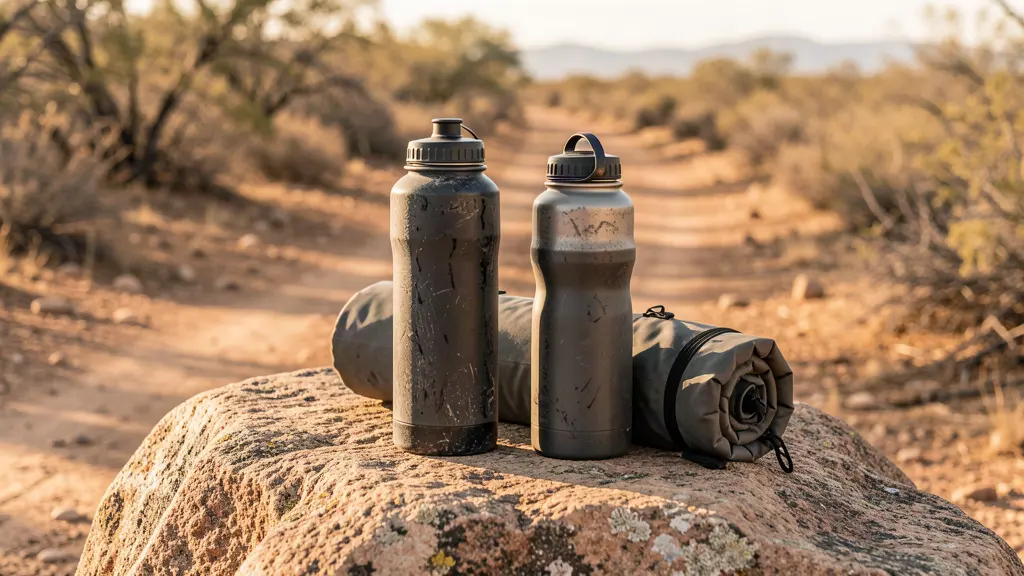
Water is usually the heaviest item in a daypack. One liter weighs about 2.2 pounds before the container. Carry too much and every climb feels longer. Carry too little and a dry creek can end the hike.
The practical setup is simple. Carry enough to reach a confirmed source or the trailhead. Use containers that you can clean. Match the treatment to the water risk. Keep a backup that needs no battery.
How much water should you start with?
There is no single number for every hike.
For moderate activity in moderate weather, about 0.5 liter per person per hour is a useful packing estimate. It is not a target that you must force yourself to drink. Increase it for heat, direct sun, steep climbing, a heavy pack, dry air, high elevation, and long gaps between water. REI uses the same half-liter starting point .
Local guidance takes priority. Grand Canyon National Park advises one-half to one quart per hour while hiking in the heat. Pinnacles National Park advises at least one liter per person per hour in its heat guidance. The difference reflects the route and weather. Check the land manager’s trail page, current water notices, and seasonal tap closures. Grand Canyon also warns that maintained water systems can fail.
Pack with this method:
- Estimate the time to the next confirmed potable or treatable source.
- Use local guidance. If none exists, start with 0.5 liter per hour in moderate conditions.
- Increase the amount for heat, exposure, climbing, altitude, and your known sweat rate.
- Add a reserve for a slow return, wrong turn, injury, or failed source.
Do not count a blue line on a map as water. A creek can be seasonal and a spring can stop running. Reach each planned refill with some water left.
High elevation can increase effort and expose you to cold and low humidity. Hydration helps you function, but it does not prevent acute altitude illness. The National Park Service guidance for Denali makes that distinction.
Bottle, soft flask, or hydration bladder?
Reservoirs usually carry more water and make frequent drinking easier. Bottles are easier to refill, inspect, and clean.
- Hard bottle: easy filling, cleaning, tablet dosing, and level checks. Takes fixed space and can be hard to reach.
- Soft flask: low empty weight and front-pocket carry. Awkward to fill, easier to puncture, and the valve can leak or freeze.
- Hydration bladder: large capacity and drinking without stopping. Hard to see the level, more cleaning, and the hose can leak or freeze.
A hard bottle is the least complicated option. A wide mouth is easier to fill and scrub. Insulation adds weight, but it can help in freezing weather. For a conventional travel bottle with two ways to drink, see our Owala water bottle review .
A soft flask works well in a running vest. It shrinks as you drink. It is less suitable as the only container on a remote hike because one puncture can remove the full supply.
A bladder makes frequent sipping easy, but it hides the remaining amount. Check it at planned stops. Keep it outside the pack’s waterproof liner, so a leak does not soak insulation or spare clothes. The CamelBak Octane 25 review shows a pack built around a reservoir and hose.
On long or remote routes, split water between two containers. One loose cap then becomes an inconvenience. Put plain water in the bladder and mix electrolytes in a bottle that is easier to scrub.
Filters, tablets, and UV: when each is enough
Clear water is not proof of safe water. The CDC’s hiking water guidance says a clear mountain stream can still contain bacteria, viruses, and parasites.
Portable filters
A filter is practical on many North American backcountry routes. It can remove sediment and treat water as you collect it. Check the label. The CDC says an absolute pore size of 0.3 micron or smaller can remove bacteria and parasites, but not viruses. Many basic filters remove parasites but do not remove all bacteria.
A filter alone can be enough when its tested claims match the expected organisms and local guidance supports it. Use more protection near heavy human use, poor sanitation, floodwater, or another known virus risk. When boiling is not practical, the CDC’s broader recommendation is to filter and then disinfect.
Chemical tablets or drops
Tablets weigh little and have no moving parts. They are useful backup for a filter.
They are not instant. Active ingredients differ in pathogen coverage and contact time. Use the full label dose and wait for the stated time. Filter cloudy water first. Do not assume that every tablet handles Cryptosporidium.
The CDC advises pregnant people, people with thyroid problems, and people with iodine hypersensitivity to avoid iodine-treated water. Nobody should drink iodine-treated water for more than a few weeks.
UV purifiers
A portable UV unit can treat bacteria, viruses, and parasites in small amounts of clear water. It does not remove grit or chemical contamination. Cloudy water can shield organisms, so prefilter it. UV is enough only when the water is clear, the device completes its cycle, and the battery works. Carry tablets as backup.
Boiling
Boiling is the most reliable method for killing germs, but it uses time and fuel. The CDC says to boil clear water for one minute. Above 6,500 feet, boil for three minutes. Boiling and disinfection do not make water with harmful chemicals, toxins, or radioactive contamination safe. Use another source.
Electrolytes without the sales pitch
Plain water and normal food are enough for many short, moderate hikes. A branded powder is not required for a walk that ends before lunch.
Electrolytes become more useful during prolonged sweating, high heat, or sustained hard work. Salty food can supply them. Grand Canyon National Park recommends plain water, electrolyte replacement, and salty snacks for hot-weather hikes.
A simple kit is one or two single-serve packets and salty food. Mix the packet in a bottle, not the bladder. This keeps the bladder easier to clean.
More is not safer. Large amounts of plain water with too little salt can contribute to hyponatremia. On a cool, short hike, drink when you are thirsty. In dry heat, do not wait for thirst. Grand Canyon’s FAQ says that by the time you feel thirsty you are already behind, and that you should drink a half-quart to a quart every hour you are hiking in the heat. Eat during long, hot hikes. People with medical fluid or sodium restrictions should follow their clinician’s advice.
The weight question: “I’ll find a stream”
One liter of water weighs about 2.2 pounds. Three liters add about 6.6 pounds. A filter can reduce carried weight, but only when the route has reliable water.
Before you depend on a source, confirm that:
- It should run in the current season.
- You can reach it safely.
- Your treatment covers the likely contaminants.
- You can carry enough for the next dry section.
Carry water to the first reliable source. Refill before the dry section, not after every bottle is empty. Keep tablets for a clogged filter, broken bag, dead UV battery, or frozen filter.
Large storage belongs at the vehicle or camp. The Dometic GO 11-liter jug and faucet can support a trailhead or base camp. It is not hiking luggage.
Winter and airport notes
A bladder hose and bite valve can freeze before the main reservoir. Yosemite winter rangers advise blowing water back through the hose after drinking and tucking the hose away. They also note that a wide-mouth bottle is less likely to freeze. See the Yosemite winter water guidance .
Check filter instructions before a winter trip. Some wet hollow-fiber filters can be damaged by freezing. Sawyer says to replace a filter if you suspect it froze after initial wetting, because field inspection cannot confirm damage. Keep a vulnerable filter warm and carry chemical backup.
For flights, empty every bottle, soft flask, and bladder before security. TSA permits empty water bottles in carry-on bags. I could not confirm a separate TSA item entry for hydration bladders. Carry the reservoir empty and accessible, then fill it after security.
What not to buy
Skip gear that adds parts without solving a trail problem.
- Novelty bottles with complex caps, scent pods, infusers, or narrow passages that are difficult to clean
- “Always safe” claims that do not name organisms, pore size, test standard, cartridge life, or limits
- A filter straw as the only treatment method, because it does not let you carry treated water across a dry stretch
- One large reservoir as the only container on a remote route
- A UV purifier without backup treatment
- A heavy insulated bottle when temperature control does not justify the weight
No portable device makes every natural source safe. Avoid water affected by mine drainage, fuel, harmful algal blooms, agricultural chemicals, or other suspected chemical contamination.
Short hiking hydration packing list
- Water capacity based on time, weather, terrain, and confirmed resupply
- Two containers for long or remote routes
- Filter or purifier matched to the expected risk
- Chemical tablets as backup
- Plain water plus salty food or an electrolyte packet for long, hot hikes
- Small cloth or prefilter for silty water
- Current notes on taps, springs, stream flow, and dry sections
- In winter, a wide-mouth or insulated bottle and freeze protection for the filter
FAQ
Is a hydration bladder better than bottles?
It is better for frequent drinking and carrying more water close to your back. Bottles are easier to inspect, refill, clean, and divide. A bladder plus one bottle gives useful redundancy.
Do I need to filter every mountain stream?
Treat it unless the land manager identifies it as potable. Clear appearance, cold temperature, and fast flow do not prove that it is free of germs.
Are purification tablets enough by themselves?
Sometimes. It depends on the active ingredient, source clarity, organisms, dose, and contact time. For unknown water, filtering first and then disinfecting gives broader protection.
Can I take a full water bottle through airport security?
Under standard TSA liquid rules, no. Take an empty bottle through the checkpoint and fill it afterward.
Should I carry electrolytes on every hike?
No. Plain water and food are enough for many short hikes. Carry electrolyte mix or salty food for long, hot, or high-sweat trips.